
Jerry Can Sizes (2026): Every Size in Liters and Gallons
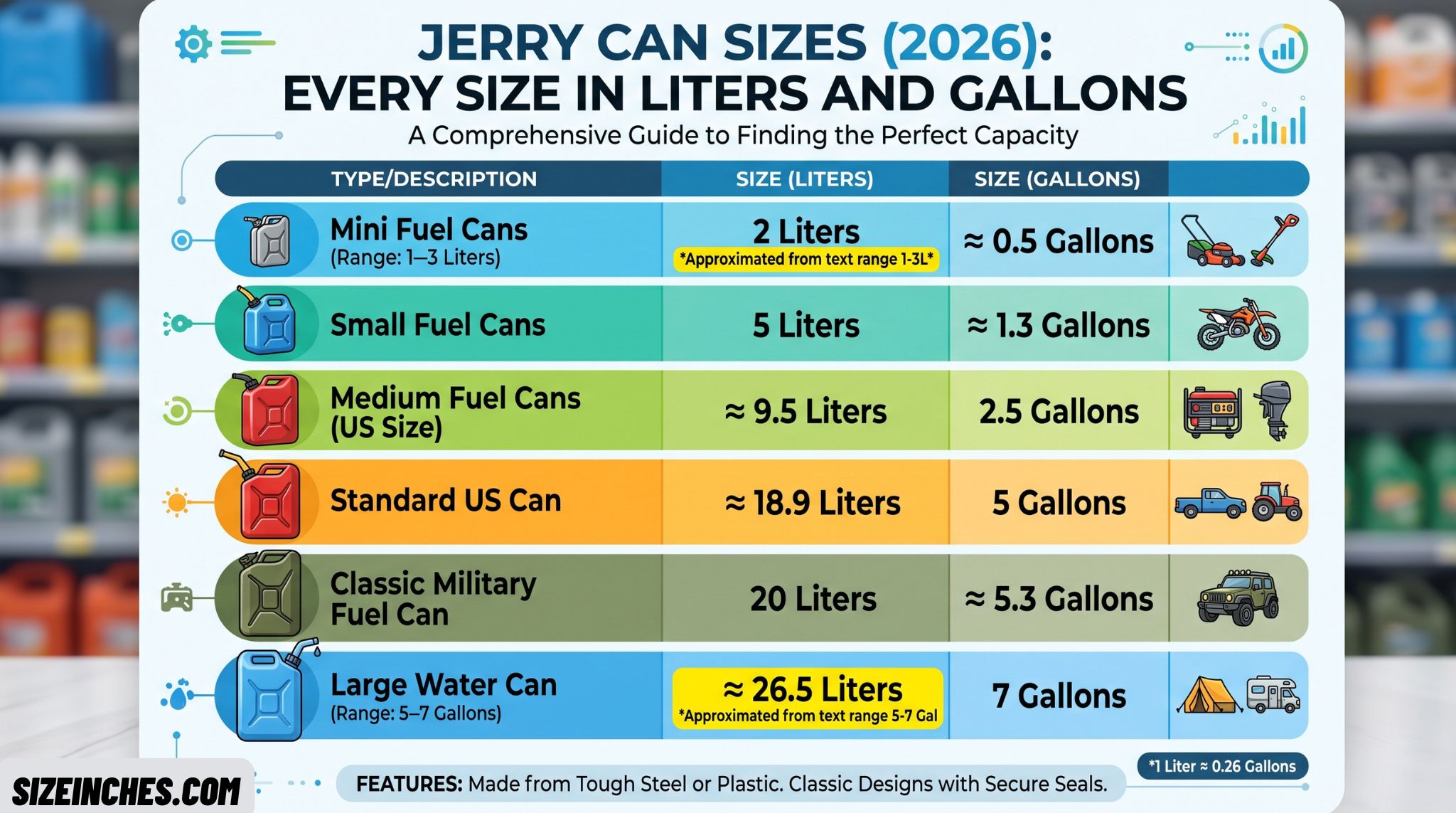
The term “jerry can sizes” means the different capacities a jerry can comes in. They range from small 5-liter cans up to the classic 20-liter can. In US sizes, fuel cans often hold 1, 2.5, or 5 gallons.
Have you ever stood in a store unsure which fuel can to buy? The right size saves you money and fits your needs. Once you know the options, you can pick the perfect can with ease.
A jerry can is usually made from steel or tough plastic. The classic 20-liter design dates back to the 1930s military. Bigger water cans hold 5 to 7 gallons, while mini cans hold just 1 to 3 liters.
Jerry Can Sizes in Different Units
The classic jerry can holds 20 liters, which equals about 5.28 US gallons or 4.4 imperial gallons. Smaller cans come in 5-liter and 10-liter sizes, and US fuel cans often use 1, 2.5, and 5-gallon capacities. Here’s the full breakdown so you can convert between them fast.
| Size | Liters | US Gallons | Imperial Gallons |
| 5 L | 5 L | 1.32 gal | 1.10 gal |
| 10 L | 10 L | 2.64 gal | 2.20 gal |
| 20 L (classic) | 20 L | 5.28 gal | 4.40 gal |
| 1 US gallon | 3.79 L | 1.0 gal | 0.83 gal |
| 2.5 US gallons | 9.46 L | 2.5 gal | 2.08 gal |
| 5 US gallons | 18.93 L | 5.0 gal | 4.16 gal |
Quick Reference Table
Here are the common jerry can sizes with their capacity, rough dimensions, and best use. Sizes and weights vary by brand and material, so treat the dimensions and weights as close approximate figures.
| Size | Capacity | Approx. Full Weight (Fuel) | Best For |
| 5 L | 1.3 US gal | ~9–10 lb | Small tools, mixing fuel |
| 10 L | 2.6 US gal | ~18 lb | Day trips, backup fuel |
| 20 L (classic) | 5.3 US gal | ~35–37 lb | Overlanding, main fuel supply |
| 1 US gal | 3.8 L | ~7–8 lb | Lawn mowers, quick top-ups |
| 2.5 US gal | 9.5 L | ~17–18 lb | Cars, generators |
| 5 US gal | 18.9 L | ~35 lb | Large fuel or water storage |
| Water can (5–7 gal) | 19–26 L | ~44–58 lb | Camping water supply |
| Mini can (1–3 L) | 0.3–0.8 gal | ~2–6 lb | Motorcycles, small engines |
14 Common Jerry Can Sizes and What They Hold
The Classic 20-Liter Jerry Can
READ ALSO : Miles to Steps Calculator : How Many Steps Are in a Mile?
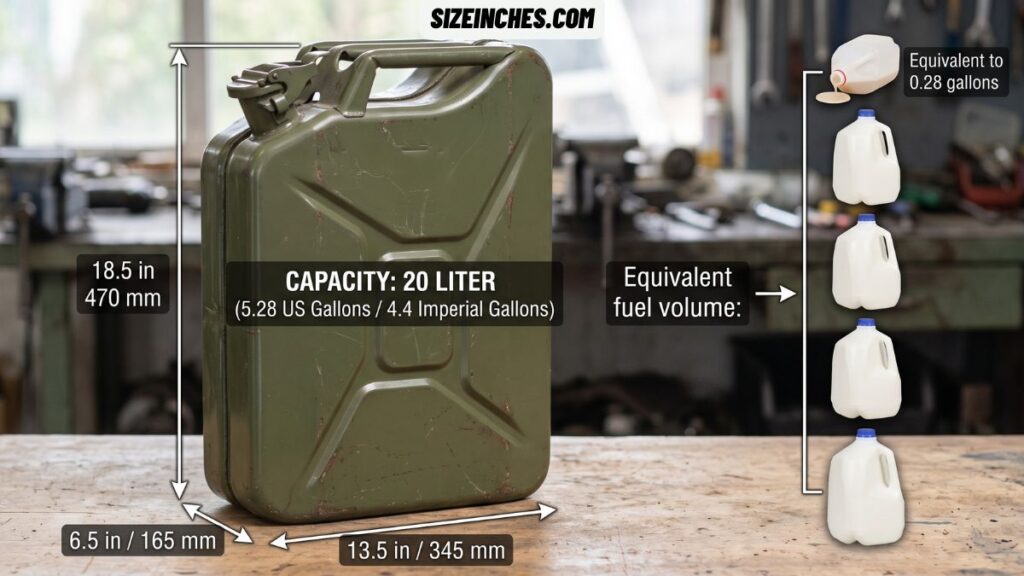
The 20-liter jerry can is the original and most common size. It holds 20 liters, which is about 5.28 US gallons or 4.4 imperial gallons. A typical steel one measures roughly 18.5 inches tall, 13.5 inches wide, and 6.5 inches deep (470 × 345 × 165 mm), though this varies by brand. That’s about as much fuel as four one-gallon milk jugs plus a bit more.
This design dates back to 1930s Germany, built for the military to carry fuel over rough ground. Soldiers nicknamed it the “jerry” can, using slang for German troops. The pressed-steel body, three-handle top, and built-in spout became a worldwide standard. A full 20-liter can of gasoline weighs about 35 to 37 pounds, so the sturdy handles matter for carrying it.
The 5-Liter Jerry Can
The 5-liter jerry can is a compact, easy-to-carry size. It holds 5 liters, or about 1.32 US gallons. A typical one stands roughly 11 inches tall and 7 inches wide, small enough to tuck into a car trunk or garage shelf. That’s about the same as a large 5-liter water bottle you’d see at the store.
This small size is popular for mixing two-stroke fuel, filling garden tools, or keeping a little backup gas on hand. Many are made from HDPE plastic, which resists rust and keeps the can light. A full 5-liter can of fuel weighs only about 9 to 10 pounds, so almost anyone can lift it with one hand. It’s the go-to for small, everyday fuel jobs.
The 10-Liter Jerry Can
READ ALSO : How Much Is 300 g? Everyday Objects to Picture It
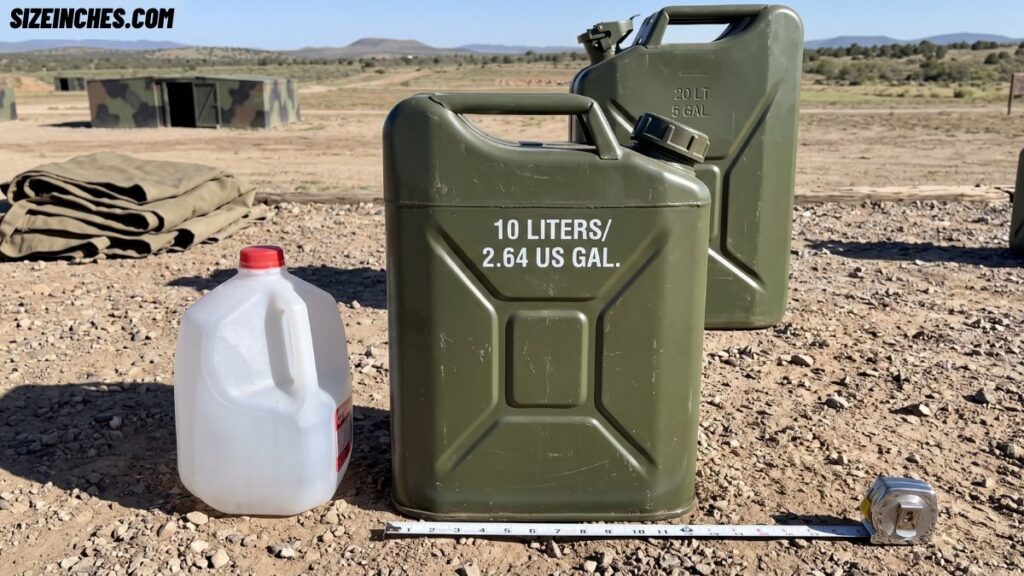
The 10-liter jerry can sits in the middle of the range. It holds 10 liters, or about 2.64 US gallons. A typical one stands roughly 14 inches tall and 11 inches wide. That’s about as much as two and a half one-gallon milk jugs, or half a classic 20-liter can.
This size balances capacity and weight, which makes it a favorite for day trips, boats, and generators. It carries enough fuel to matter without getting too heavy to lift. A full 10-liter can of gasoline weighs about 18 pounds. Many come with a flexible spout that folds away for storage, then extends for a clean, spill-free pour. It’s a practical pick when a 5-liter feels too small but a 20-liter feels too big.
The 1-Gallon Jerry Can
The 1-gallon jerry can is the smallest common US size. It holds 1 US gallon, which is about 3.79 liters. A typical one stands roughly 10 inches tall, small enough to sit on a shelf or fit in a small bag. That’s the same volume as a standard milk jug from the grocery store.
This little can is handy for lawn mowers, string trimmers, and other small engines that don’t need much fuel. Modern US gas cans include a child-resistant cap and a spout built to cut down on spills and fumes. A full 1-gallon can of gasoline weighs only about 7 to 8 pounds. Since a gallon is easy to picture, this size makes a great mental anchor for the larger cans.
The 2.5-Gallon Jerry Can
READ ALSO : How Tall Is a Red Bull Can? Height & Size Guide
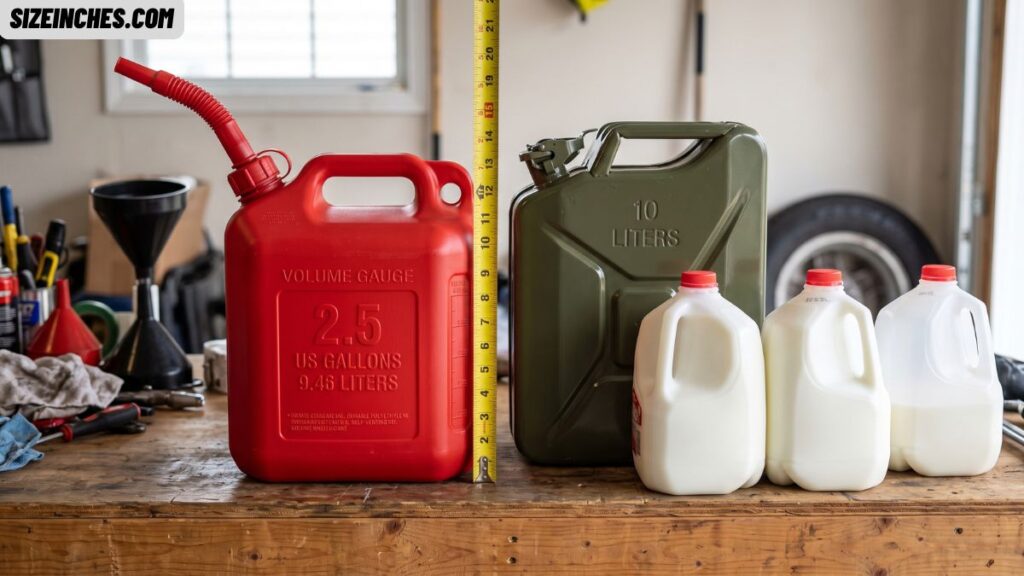
The 2.5-gallon jerry can is a popular US fuel can size. It holds 2.5 US gallons, or about 9.46 liters. A typical one stands roughly 15 inches tall. That’s close in size to a 10-liter metric can, and about the same as two and a half milk jugs.
This size is a common choice for topping up cars, filling generators, or keeping storm backup fuel. It carries a useful amount without being too heavy for most people to pour. A full 2.5-gallon can of gasoline weighs about 17 to 18 pounds. Most US models are red HDPE plastic, since red marks a container as gasoline by safety convention. It’s one of the most widely sold fuel cans in American stores.
The 5-Gallon Jerry Can
The 5-gallon jerry can is the largest common US fuel size. It holds 5 US gallons, or about 18.93 liters. A typical one stands roughly 18 inches tall. Note that it’s slightly smaller than the metric 20-liter can, which holds about 5.28 gallons. People often mix up the two, but they’re not quite the same.
This size is built for serious fuel storage, long trips, and backup power. A full 5-gallon can of gasoline weighs about 35 pounds, so it’s near the top of what one person can pour easily. The same size can also hold water for camping, though water is heavier at about 44 pounds when full. Sturdy handles and a good spout make this large can manageable.
A Water Jerry Can
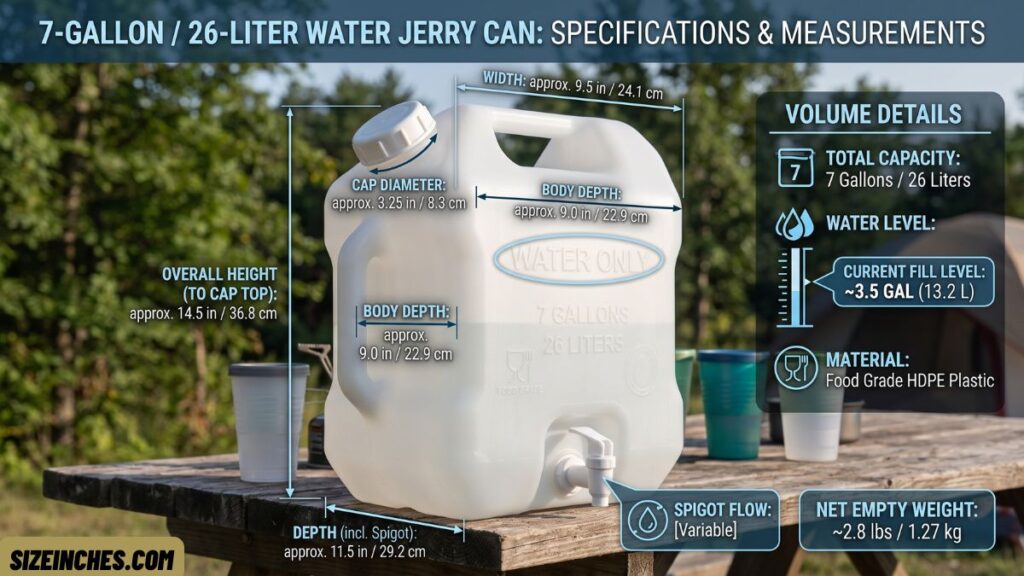
Water jerry cans come in larger sizes built for camping and emergencies. Common ones hold about 5 to 7 US gallons, or roughly 19 to 26 liters. A 7-gallon water can stands taller and wider than a fuel can, since it carries more. That’s enough drinking water to last one person several days.
Water cans are usually blue HDPE plastic, since blue marks a container as safe for drinking water. Many include a screw-on spigot near the base, so you can fill a bottle or pot without lifting the whole can. Water is heavy, at about 8.3 pounds per gallon, so a full 7-gallon can weighs close to 58 pounds. These cans are a staple for campsites and storm kits.
A Mini or Portable Jerry Can
Mini jerry cans are the smallest option, built for tiny fuel needs. They hold about 1 to 3 liters, or roughly 0.3 to 0.8 US gallons. These small cans fit on a motorcycle rack, in a backpack, or on an ATV. That’s about the size of a large soda bottle.
These little cans are handy for carrying just enough spare fuel to reach the next gas station. Some are made from aluminum for a light, rugged build, while others are plastic. A full mini can weighs only a few pounds, so it’s easy to strap on and forget until you need it. Some novelty versions are even made as decorative cans or flasks, though those aren’t meant for fuel.
The 3-Gallon Jerry Can
The 3-gallon jerry can is a handy in-between US size. It holds 3 US gallons, or about 11.36 liters. A typical one stands roughly 16 inches tall. That’s about the same as three milk jugs, or a little more than a 10-liter metric can. It fills the gap between the small 1-gallon and the larger 5-gallon cans.
This size suits mid-size engines, boats, and generators that need more than a gallon but not a full five. It carries a useful amount while staying light enough for most people to pour with one hand. A full 3-gallon can of gasoline weighs about 21 to 22 pounds. Most US models are red plastic with a spill-resistant spout. It’s a practical middle choice for regular fuel jobs.
The 15-Liter Jerry Can
The 15-liter jerry can is a slightly smaller take on the classic. It holds 15 liters, or about 3.96 US gallons. A typical one stands roughly 17 inches tall, close to the 20-liter can but a bit shorter. That’s about the same as four milk jugs, or three-quarters of a classic 20-liter can.
This size gives you most of the capacity of a 20-liter can while being lighter to lift and pour. It’s a common pick for overlanding and camping when a full 20-liter feels too heavy. A full 15-liter can of gasoline weighs about 26 to 28 pounds. Many share the same pressed-steel or HDPE build as the classic can. It’s a smart choice when weight matters as much as capacity.
A NATO Steel Jerry Can
The NATO steel jerry can is the rugged military-spec version of the classic. It holds the standard 20 liters, or about 5.28 US gallons, but is built to strict military standards. A typical one measures close to the classic 18.5 inches tall and 13.5 inches wide. It’s the toughest, most durable jerry can you can buy.
This can follows the original pressed-steel design, with a welded seam, three-handle top, and a locking cam-lever cap. The three handles let two people pass it hand to hand, or one person carry two cans at once. A full NATO can of fuel weighs about 35 to 40 pounds, with the heavier steel adding weight over plastic. It’s the top pick for serious off-road and emergency fuel storage.
A 2-Liter Mini Jerry Can
The 2-liter mini jerry can is a very compact fuel option. It holds 2 liters, or about 0.53 US gallons. A typical one stands only about 8 inches tall, small enough for a backpack, motorcycle rack, or ATV. That’s about the same as a large bottle of soda.
This tiny size carries just enough spare fuel to reach the next gas station on a bike or small engine. Many are made from aluminum for a light, rugged build that resists dents and rust. A full 2-liter can of gasoline weighs only about 4 pounds, so it straps on easily and stays out of the way. It’s the go-to for riders and hikers who want a small fuel backup.
A 25-Liter Jerry Can
The 25-liter jerry can is a larger-capacity option above the classic size. It holds 25 liters, or about 6.6 US gallons. A typical one stands taller and wider than the 20-liter can, since it carries more. That’s about the same as six and a half milk jugs, or over five gallons of fuel or water.
This size is popular for long expeditions, farm use, and bulk storage where fewer, bigger cans mean fewer trips. It carries a lot, so a full one is heavy. A full 25-liter can of gasoline weighs about 44 to 46 pounds, near the top of what one person can safely lift. Most are sturdy HDPE plastic. Filled with water, it weighs close to 60 pounds, so many prefer a base spigot.
A Slimline or Flat Water Can
Slimline jerry cans are flat, narrow cans built to save space. They usually hold about 10 to 11 liters, or roughly 2.6 to 2.9 US gallons, in a thin shape only a few inches deep. A typical one is tall and wide but very slim, so it slides into tight gaps. That’s about the same as a 10-liter can in a flatter form.
This design is popular for overlanding, where cans mount flat against a vehicle wall, roof rack, or door to save room. The narrow profile also stacks neatly for storage. Most are made from tough HDPE plastic in blue for water or other colors for fuel. A full slimline water can weighs about 22 to 24 pounds. It’s a smart pick when storage space is tight.
How to Find a Jerry Can’s Size Without a Gauge
Not sure how big a can is? These tricks help you figure out its capacity with no special tools.
Check the Label or Molding
This is the easiest method. Most jerry cans have the capacity printed on a label or molded right into the plastic or metal. Look on the side, the top, or the base. You’ll usually see a number like “20 L” or “5 GAL.” Many cans list both units. This is the fastest, most accurate way to confirm a can’s size.
Fill It With a Known Container
If there’s no label, fill the empty can using a container you already know. A standard milk jug holds exactly 1 US gallon, so count how many jugs of water it takes to fill the can. Five jugs means about 5 gallons. You can also use a 1-liter bottle and count fills to get the size in liters.
Measure and Calculate
For a rough estimate, measure the can’s inside height, width, and depth in inches. Multiply the three numbers to get cubic inches. Then divide by 231, since one US gallon is 231 cubic inches. The result is the rough capacity in gallons. It won’t be exact, because of the can’s shape, but it gets you close.
Jerry Can Sizes vs. Other Common Containers
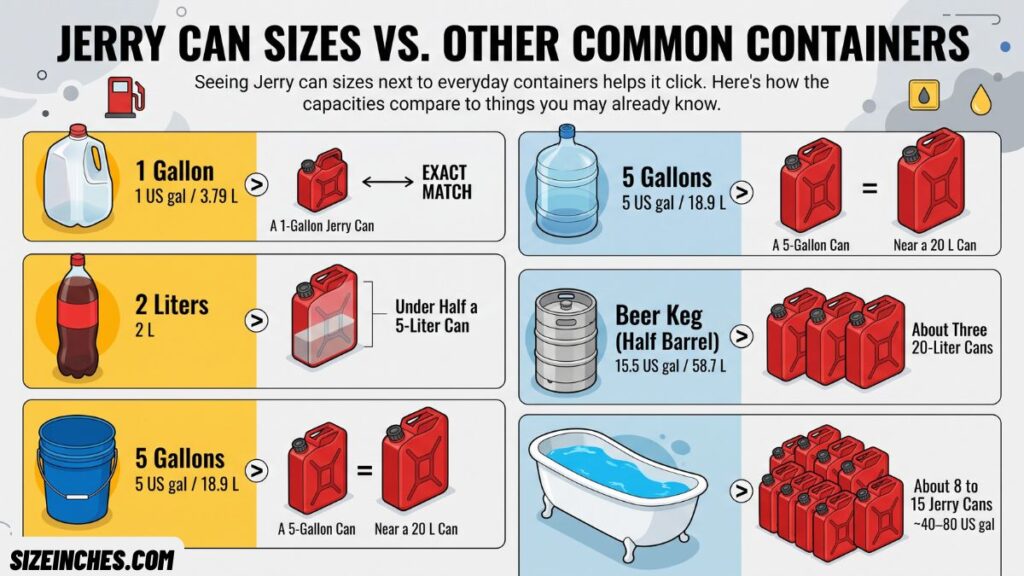
Seeing jerry can sizes next to everyday containers helps it click. Here’s how the capacities compare to things you may already know.
| Container | Capacity | Jerry Can Equivalent |
| Milk jug | 1 US gal / 3.79 L | A 1-gallon jerry can |
| Large soda bottle | 2 L | Under half a 5-liter can |
| Standard bucket | 5 US gal / 18.9 L | A 5-gallon can, near a 20 L |
| Water cooler jug | 5 US gal / 18.9 L | A 5-gallon can |
| Beer keg (half barrel) | 15.5 US gal / 58.7 L | About three 20-liter cans |
| Bathtub (full) | ~40–80 US gal | About 8 to 15 jerry cans |
A one-gallon milk jug matches the smallest US fuel can exactly. A standard 5-gallon bucket holds about the same as a 5-gallon can, and just under a classic 20-liter can. A beer keg holds about three full jerry cans of liquid. A full bathtub can hold the equivalent of 8 to 15 jerry cans. Keep those anchors in mind, and any jerry can size becomes easy to picture.
Frequently Asked Questions
What Is the Size of a Jerry Can?
The classic jerry can holds 20 liters, or about 5.28 US gallons. Smaller cans hold 5 or 10 liters, and US fuel cans often hold 1, 2.5, or 5 gallons.
How Big Is a 20l Jerry Can?
A 20-liter jerry can holds about 5.28 US gallons. It stands roughly 18.5 inches tall and 13.5 inches wide, though sizes vary by brand.
What Is the Biggest Size Jerry Can?
Common large cans hold 20 to 25 liters, or about 5.3 to 6.6 gallons. Big water jerry cans can reach 7 gallons, near 26 liters.
What Is the Average Size of a Gas Can?
The most common US gas can holds 5 gallons, or about 18.9 liters. Smaller 1 and 2.5-gallon cans are also popular for small jobs.
What Is the Biggest Size Gas Can?
The largest common gas can holds 5 US gallons, or about 18.9 liters. A full one weighs about 35 pounds, near the limit for easy pouring.
How much fuel does a jerry can hold?
A classic 20-liter jerry can holds about 5.28 US gallons of fuel. That’s enough to add roughly 40 to 60 miles of range to many cars, depending on fuel economy. Smaller 5 and 10-liter cans hold about 1.3 and 2.6 gallons. Always store fuel in an approved, labeled container.
Conclusion
Now you know the common jerry can sizes very well. They range from small 5-liter cans up to the classic 20-liter can. The 20-liter size holds about 5.28 US gallons. In US sizes, fuel cans often hold 1, 2.5, or 5 gallons. Bigger water cans hold 5 to 7 gallons. Mini cans hold just 1 to 3 liters for small engines.
You can also use everyday things to picture these sizes. A 1-gallon can matches a milk jug exactly. A 5-gallon can matches a standard bucket. The classic 20-liter can holds about four milk jugs of fuel. Keep these easy anchors in mind, and you will always pick the right jerry can size.





One Comment