
How Much Is 500 Grams? 15 Everyday Objects to Picture It
The phrase “how much is 500 grams” asks you to picture this common weight. Five hundred grams equals about 17.6 ounces, or just over one pound. It is exactly half a kilogram, an easy amount to hold in one hand.
Have you ever needed to weigh something but had no scale nearby? It happens more often than you think, in the kitchen or at the post office. The good news is that common items can help you picture 500 grams with ease.
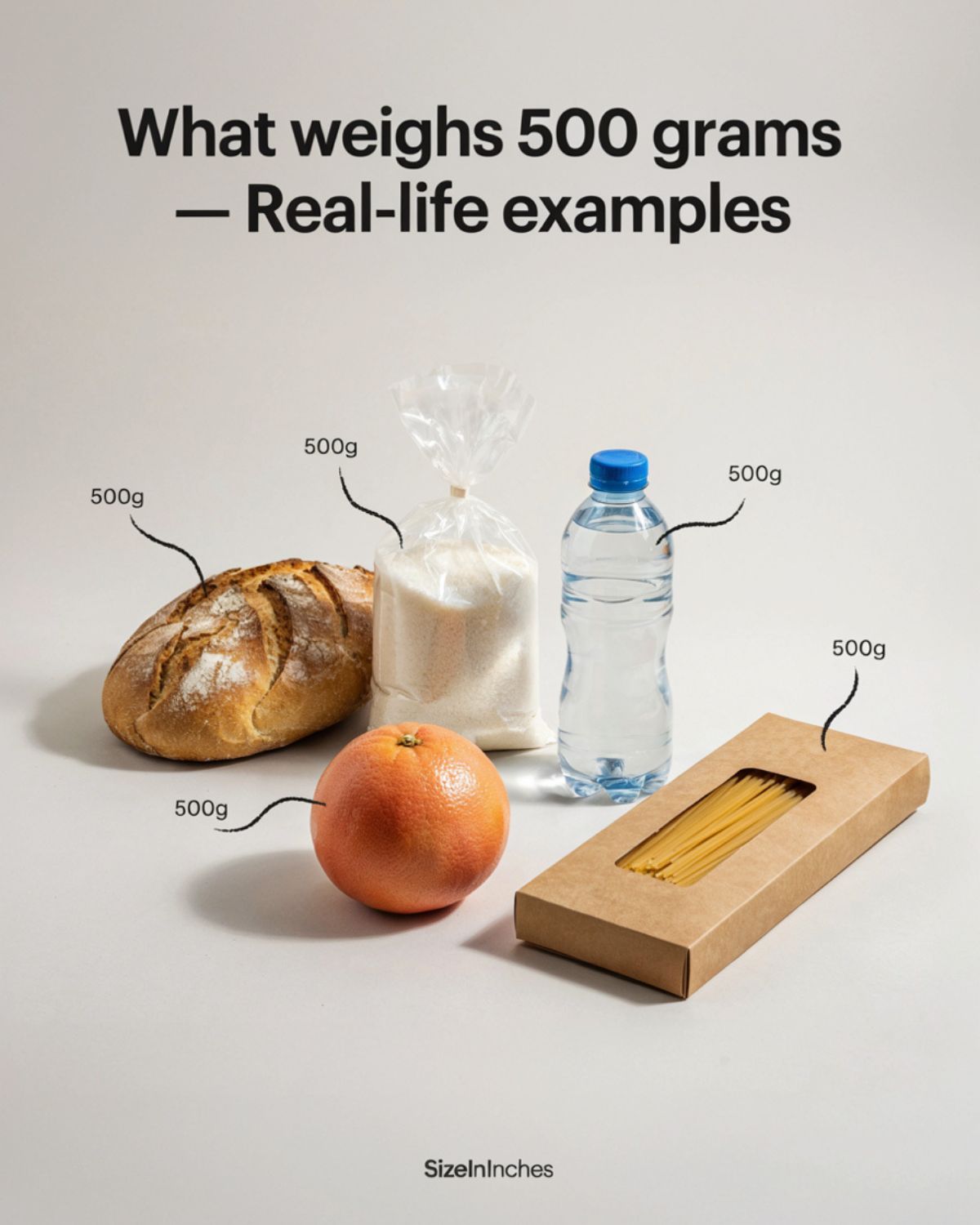
Many simple things weigh close to 500 grams. A loaf of bread, a bag of sugar, and a package of pasta all land near this mark. Even 500 mL of water weighs exactly 500 grams, which makes a handy kitchen trick.
500 Grams in Different Units
Five hundred grams equals about 17.6 ounces in the imperial system and 0.5 kilograms in metric. It’s a medium weight, heavier than a soda can but lighter than a bag of sugar. Here’s the full breakdown so you can convert it fast.
| Unit | Equivalent | Notes |
| Grams | 500 g | The base figure |
| Kilograms | 0.5 kg | Exactly half a kilo |
| Milligrams | 500,000 mg | Handy for tiny amounts |
| Ounces | 17.64 oz | Rounded from 17.637 oz |
| Pounds | 1.1 lb | Just over one pound |
| Carats | 2,500 ct | 1 carat = 0.2 g (for gems) |
| Water volume | 500 mL | Water weighs 1 g per mL |
Quick Reference Table
Here are common items that weigh 500 grams, or land very close. Some are spot-on, and some are ballpark. The table is honest about which is which.
| Item | Exact or Approx. | Visual / Notes | Best For |
| 100 US nickels | 500 g exact | Each nickel is exactly 5 g | Precise weight |
| 500 mL of water | 500 g exact | About two cups | Kitchen use |
| Standard loaf of bread | ~450–570 g | A common sandwich loaf | Everyday object |
| Package of dry pasta | 500 g | Often sold this exact size | Food weight |
| Full 500 mL water bottle | ~520 g | Water plus the plastic | Everyday object |
| Jar of peanut butter | ~450–510 g | A standard-size jar | Pantry item |
| Bag of sugar | 500 g | A common pack size | Baking |
| Large grapefruit | ~400–600 g | One big, ripe fruit | Produce |
| Block of butter | ~450–500 g | A European block or US box | Cooking |
| Medium hardcover book | ~450–550 g | A typical novel | Household |
| A pint of liquid | ~473 g | Just under 500 g | Rough guide |
15 Everyday Things That Weigh 500 Grams
100 US Nickels
READ ALSO : What Weighs 100 Grams? 8 Everyday Items (2026 Guide)
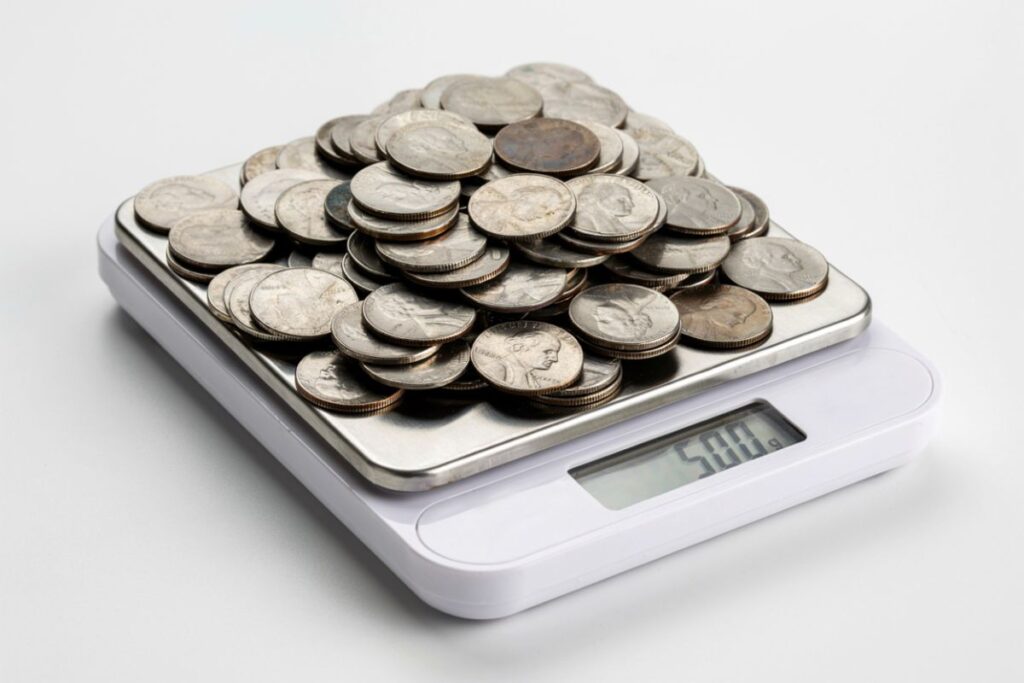
One hundred US nickels weigh exactly 500 grams. Each nickel weighs precisely 5.00 grams, so 100 of them add up to a perfect 500. This is the most accurate way to picture the weight, and it’s one you can test at home if you have a roll or two. Hold a stack and feel how half a kilo sits in your hand.
The US Mint sets the nickel’s weight by law, which is why the number never changes. Every nickel is 75% copper and 25% nickel, giving it a solid, heavy feel. Science teachers and coin collectors often use nickels as free calibration weights. If you ever need to check a kitchen scale, 100 nickels make a reliable 500-gram test weight. Two full rolls of nickels come to 80 coins, so add 20 more for an exact match.
500 mL of Water
Five hundred milliliters of water weighs 500 grams. This works because water has a density of about 1 gram per milliliter. So the volume and the weight match up almost perfectly. Pour water up to the 500 mL line on a measuring jug, which is about two cups, and you’re holding 500 grams.
This tidy match is a rule of the metric system, and it’s a big reason cooks love metric measures. The link stays close at room temperature, though very hot or very cold water shifts the density a tiny bit. Other liquids differ, since cooking oil is lighter and honey is much heavier than water. But for a quick 500-gram reference in the kitchen, plain water is hard to beat. It’s free, easy, and always on hand.
A Standard Loaf of Bread
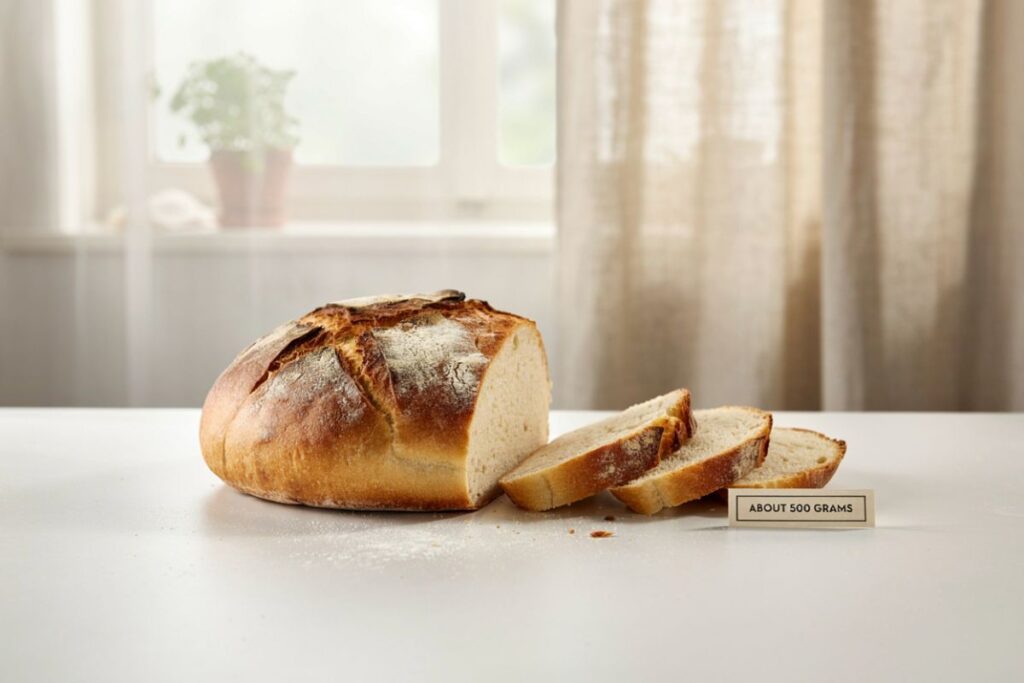
A standard loaf of bread weighs about 450 to 570 grams, so an average sandwich loaf sits right around 500 grams. Pick one up at the store and you’re holding close to half a kilo. It’s one of the easiest everyday references, since most homes have a loaf in the kitchen.
Bread weight shifts with the type and size, which is why this one is a range. A dense whole-grain loaf weighs more, while an airy white loaf weighs a bit less. Bread is made from flour, water, yeast, and salt, then baked until it rises and sets. The weight is often printed on the bag, so you can check it yourself. A typical loaf gives you a simple, reliable feel for 500 grams.
A Package of Dry Pasta
A standard package of dry pasta weighs 500 grams. Many brands sell spaghetti and other shapes in this exact size, which makes it a spot-on reference. Grab a bag or box from the pantry and check the label. If it reads 500 g, you’re holding an exact half-kilo weight.
Pasta is made from wheat flour and water, shaped and then dried until hard. That drying step gives it a long shelf life and a steady weight. Package sizes do vary by country and brand, with some sold at 400 g or 1 kg instead. So always glance at the label to be sure. A 500-gram pack is common worldwide, which makes dry pasta a handy kitchen guide for the weight.
A Block of Butter
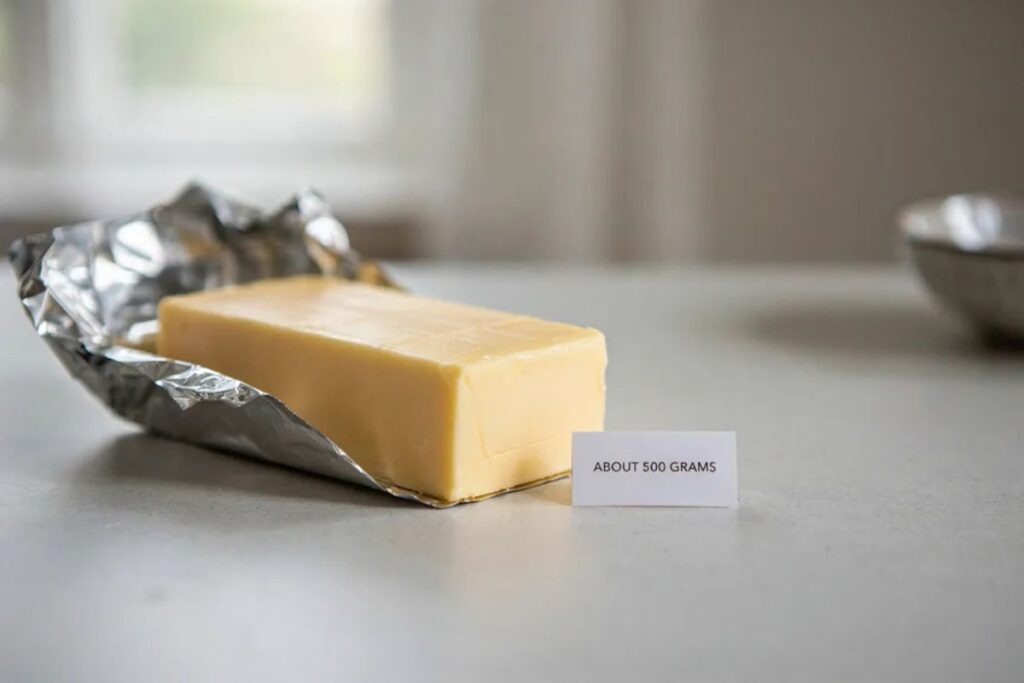
A standard block of butter weighs about 450 to 500 grams. A European-style block is often sold at exactly 500 grams, while a US box of four sticks comes to about 454 grams. Either one lands right near half a kilo. Pull one from the fridge and you’ve got a handy kitchen reference for the weight.
Butter is made by churning cream until the fat separates and thickens into a solid. It’s a baking and cooking staple, so it’s easy to find in most homes. The weight is printed on the wrapper, usually in grams and ounces. In the US, butter comes in sticks, while much of the world sells it in solid blocks. A full block gives you a close, everyday feel for 500 grams.
A Medium Hardcover Book
A medium hardcover book weighs about 450 to 550 grams. A typical novel with a few hundred pages sits right around 500 grams. Lift one off the shelf and you’re holding close to half a kilo. Since most homes have books, this is one of the easiest references to grab.
Book weight depends on the page count, paper, and cover. A thick textbook weighs much more, while a slim paperback weighs far less. The hardcover binding adds a bit of heft, with stiff boards wrapped in cloth or paper. Publishers often use a heavier, coated paper for a quality feel. A standard-size hardcover novel gives you a simple, close guide for the weight of 500 grams.
A Soccer Ball
A regulation soccer ball weighs about 410 to 450 grams, just under 500 grams. A standard size 5 ball, the kind used in adult games, lands close to the mark. Hold one and you get a good feel for a weight near half a kilo. Since soccer balls are common in garages and gyms, this is an easy reference to find.
Ball weight is set by the rules of the game, with a size 5 ball fixed in that range when properly inflated. The outer cover is stitched or bonded panels of synthetic leather, wrapped around a rubber bladder that holds the air. The air itself adds very little weight. A properly pumped soccer ball gives you a close, familiar guide for the weight of 500 grams.
A Can of Soup or Beans
Two standard cans of soup or beans together weigh close to 500 grams. A single 15-ounce can weighs about 425 grams with its contents, so a pair goes a bit over half a kilo. One large family-size can can also land near 500 grams on its own. Grab one from the pantry for a quick reference.
Canned food is sealed in a steel can with a protective inner lining, then cooked right inside for a long shelf life. The weight on the label is the net weight of the food, not the can. Sizes range from small single-serve cans to big family tins. A large can, or two smaller ones, gives you a close, everyday feel for the weight of 500 grams.
A Small Bag of Flour
A small bag of flour weighs about 500 grams to 1 kilogram, depending on the pack. Some stores sell flour in a 500-gram bag, which is a spot-on reference. Lift one and you’re holding half a kilo. Since flour is a baking basic, this is an easy weight to picture in the kitchen.
Flour is made by grinding wheat grains into a fine powder, then sifting it smooth. It’s sold by weight, so the grams are printed on the bag. Pack sizes vary widely, from small 500-gram bags to large 2-kilogram sacks. The weight stays the same whether the flour is packed loose or firm, since it’s sealed inside. A 500-gram bag gives you a simple, exact guide for the weight.
Two Medium Apples
Two medium apples together weigh about 500 grams. A single medium apple weighs close to 200 to 250 grams, so a pair lands right near half a kilo. Hold two in your hands and you get a natural, everyday feel for the weight. Since apples are common in most homes, this is an easy reference to grab.
Apple weight shifts with size and variety, which is why this is approximate. A small apple weighs less, while a large one weighs more. Apples are about 85% water, which gives them a solid feel for their size. Grocery stores sort them by count per box, and they’re sold by the pound or kilo. Two medium apples give you a close, tasty guide for the weight of 500 grams.
A Basketball
A regulation basketball weighs about 567 to 650 grams, a bit over 500 grams. A standard men’s size 7 ball sits at the higher end, while a lighter ball lands closer to the mark. Hold one and you get a feel for a weight just above half a kilo. Since basketballs are common in homes and gyms, this is a familiar reference.
Ball weight is set by league rules, with the size 7 ball fixed in that range when properly inflated. The outer cover is made from rubber, composite, or genuine leather, wrapped around a rubber bladder full of air. The pebbled surface helps with grip. A properly pumped basketball gives you a close, familiar guide for a weight just over 500 grams, useful for picturing half a kilo.
A Full 500 mL Water Bottle

A full 500 mL water bottle weighs about 520 grams. The water inside is 500 grams, and the plastic bottle adds roughly 20 more. So a small bottle of water is just over half a kilo. Since these bottles are sold everywhere, this is one of the easiest references to find on the go.
The 500 mL bottle is the standard small size for bottled water. The plastic is usually PET, a light, clear material that holds its shape yet weighs very little. That’s why nearly all the weight comes from the water, not the bottle. An empty bottle weighs only about 10 to 20 grams. Grab a full one from a fridge or shop, and you’ve got a quick, close feel for 500 grams.
A Jar of Peanut Butter
A standard jar of peanut butter holds about 450 to 510 grams of spread. A common 16-ounce jar contains close to 500 grams, which makes it a handy pantry reference. Pull one from the shelf and you’re right near the mark, though the glass jar adds a little extra weight.
Peanut butter is made by grinding roasted peanuts into a thick paste, sometimes with a bit of oil, salt, or sugar. It’s packed with protein and healthy fats, which is why it’s a popular spread. Jar sizes vary by brand, so check the label for the net weight of the contents. That number counts only the peanut butter, not the jar. For a close 500-gram guide, a standard jar works well.
A Bag of Sugar
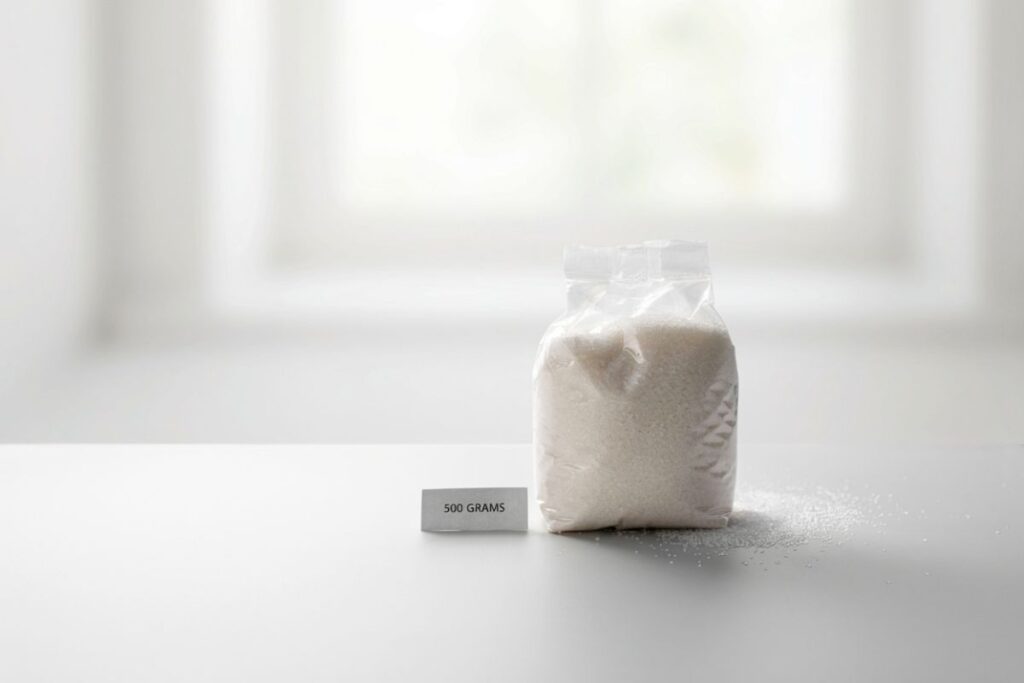
A common bag of sugar weighs 500 grams. Many stores sell granulated sugar in this exact pack size, which makes it a reliable baking reference. Lift one and you’re holding half a kilo. Since sugar is a kitchen staple, this is an easy weight to picture whenever you cook.
Sugar is sold by weight, so the grams are printed right on the bag. Pack sizes vary, with 500 g, 1 kg, and 2 kg all common on shelves. Granulated white sugar is made from sugar cane or sugar beet, refined into those fine, even crystals. The weight stays the same whether the sugar is packed loose or firm, since it’s sealed in the bag. A 500-gram pack gives you a simple, exact feel for the weight.
A Large Grapefruit
A large grapefruit weighs about 400 to 600 grams, so a big, ripe one sits right around 500 grams. Hold one in your hand and you get a natural, juicy sense of the weight. It’s a fun produce reference, since grapefruit is common in stores and easy to find.
Fruit weight shifts with size and variety, which is why this one is a range. A small grapefruit weighs less, while a jumbo one can top 600 grams. Grapefruit is about 90% water, which gives it a heavy feel for its size. It’s packed with vitamin C and sold by the piece or pound. Pick a large, firm grapefruit and it gives you a close, everyday guide for 500 grams.
How to Measure 500 Grams Without a Scale
No kitchen scale on hand? These tricks use coins, water, and a simple balance to get you close to 500 grams.
READ ALSO :What Weighs 1 Gram? Everyday Objects to Picture It
Count 100 Nickels
This is the most exact no-scale method. Since each US nickel weighs exactly 5 grams, you just count 100 nickels to reach 500 grams. Stack them in a cup or bag. Two rolls of nickels hold 80 coins, so add 20 more for a perfect match. You can even use the stack later to test or calibrate a scale, since the weight is precise.
Fill a Jug to 500 mL
Water gives you an easy match, since 500 mL of water weighs 500 grams. Grab a clear measuring jug and pour water up to the 500 mL mark, which is about two cups. That water now equals 500 grams of mass. This trick works great for cooking, and you can swap the water for any recipe liquid with a similar density.
Use a Balance and a Known Weight
Make a simple balance with a ruler and a pencil. Rest the ruler’s middle on the pencil so it tips like a seesaw. Put a known 500-gram weight, like a sealed bag of pasta, on one side. Then add your item to the other side until the ruler sits level. When both sides balance, your item weighs about 500 grams too.
500 Grams vs. Other Common Weights
Seeing 500 grams next to other weights helps it click. Here’s how it compares to amounts you may already know.
| Weight | Equals | Everyday Picture |
| 100 grams | 3.53 oz | A bar of soap or a banana |
| 250 grams | 8.82 oz | About two sticks of butter |
| 500 grams | 17.64 oz | A loaf of bread or 100 nickels |
| 1,000 grams | 2.2 lb | A full bag of sugar |
| 2,000 grams | 4.4 lb | A large bag of flour |
Five hundred grams is five times 100 grams, which is about a banana. It’s double 250 grams, or roughly two sticks of butter. It’s also exactly half of 1,000 grams, which is one kilogram. A pound is about 454 grams, so 500 grams is just a little more than a pound. Keep those anchors in mind, and any weight from a bar of soap to a big bag of flour becomes easy to judge.
Frequently Asked Questions
Is 500g Equal to 1 kg?
No, 500g is half of 1 kg. One full kilogram is 1,000 grams, so you need two lots of 500g to make 1 kg.
How Much Is 500 Grams to a Cup?
It depends on the ingredient. For water it’s about 2.1 cups, for sugar around 2.5 cups, and for flour closer to 4 cups.
How Much Is 500 Grams Equal To?
Five hundred grams equals about 17.6 ounces, or 1.1 pounds. It is exactly half a kilogram, the same as a loaf of bread or 100 nickels.
Is 500g the Same as 1 lb?
No, but they are close. Five hundred grams is about 1.1 pounds, a little heavier than 1 lb, which equals roughly 454 grams.
Is 500 grams heavy?
No, 500 grams is a light-to-medium weight. It’s about the same as a loaf of bread or a small water bottle, and you can lift it easily with one hand. In imperial terms, that’s 1.1 pounds. Most people would call 500 grams a manageable, everyday amount.
What food weighs 500 grams?
A standard package of dry pasta or a bag of sugar each weigh 500 grams, since they’re often sold at this exact size. A loaf of bread, a jar of peanut butter, or a large grapefruit also land close to 500 grams. Food weight varies, so check the label when you can.
How many nickels weigh 500 grams?
Exactly 100 US nickels weigh 500 grams. Each nickel weighs precisely 5 grams by US Mint standards, so 100 coins add up to a perfect 500. This makes a stack of nickels a free, reliable way to test or calibrate a kitchen scale at home.
How can I measure 500 grams without a scale?
Count 100 US nickels for an exact 500 grams, since each coin weighs 5 grams. You can also pour 500 mL of water, which weighs 500 grams. For other items, build a simple ruler balance and match them against a known 500-gram weight, like a sealed pasta pack.
Conclusion
Now you know the answer to how much is 500 grams. Five hundred grams equals about 17.6 ounces, or just over one pound. This weight is exactly half a kilogram, easy to hold in one hand. One hundred US nickels weigh exactly 500 grams, since each coin weighs 5 grams. A loaf of bread and a bag of sugar also land near the mark. These simple items help you judge the weight without a scale.
You can use these tricks any time you need them. In the kitchen, 500 mL of water weighs exactly 500 grams. A package of pasta and a full water bottle land close too. Keep these easy examples in mind, and you will always know how much is 500 grams.


2 Comments