How Big Is 2 oz? Volume, Weight, and 15 Real Comparisons
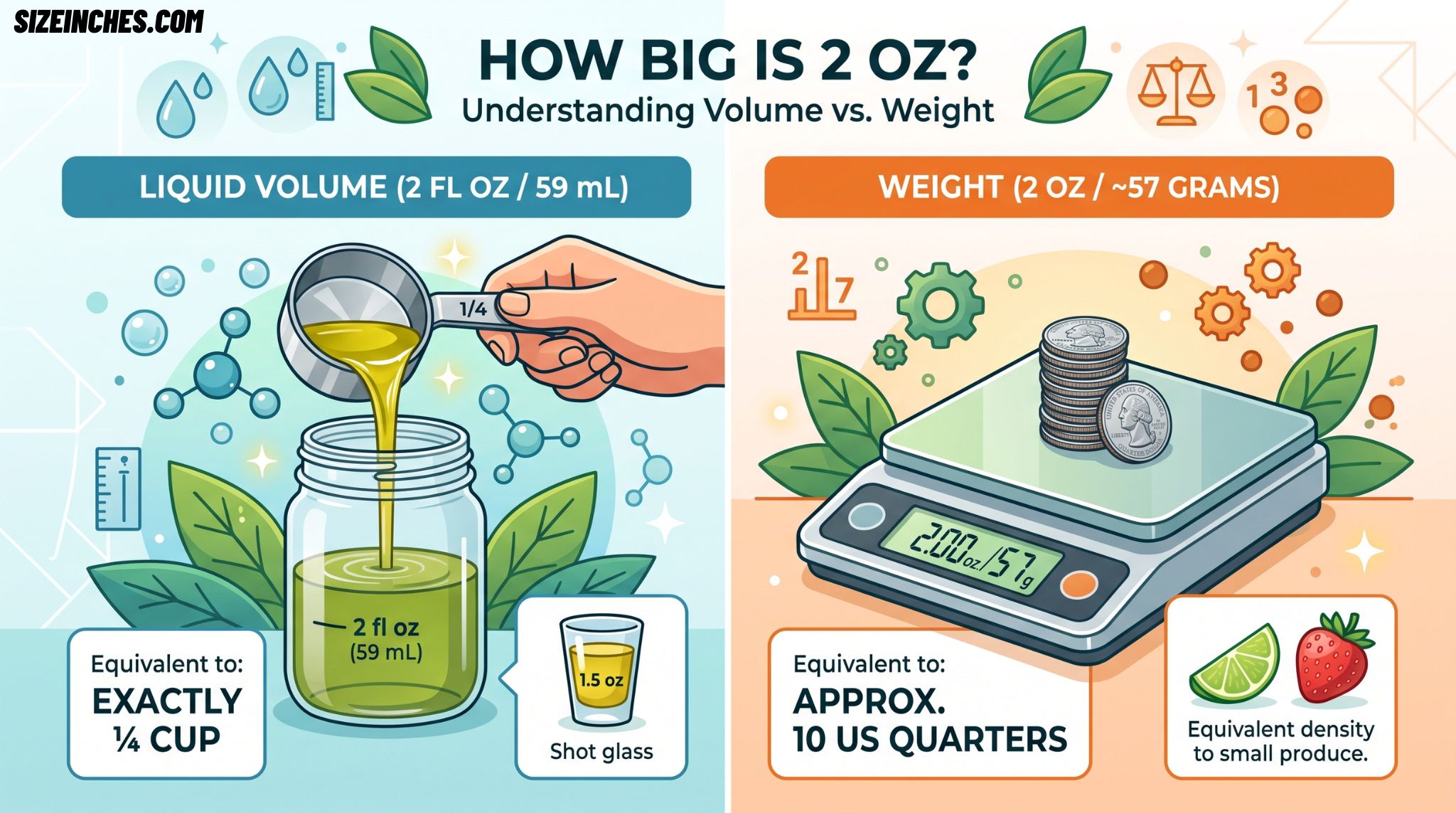
The phrase “how big is 2 oz” asks you to picture this small amount. As a liquid, 2 fluid ounces equals 59 mL, or exactly ¼ cup. As a weight, 2 ounces equals about 57 grams.
Have you ever read a recipe and wondered what 2 oz really looks like? It happens often, in the kitchen or at the store. The good news is that common items can help you picture 2 oz with ease.
Many simple things match this amount. A ¼ cup measure holds exactly 2 fluid ounces. A large egg weighs exactly 2 ounces, and a tennis ball comes very close.
2 oz in Different Units
Two fluid ounces equals 59 milliliters, which is exactly ¼ cup or 4 tablespoons. Two ounces by weight equals 56.7 grams, or one-eighth of a pound. These are two different measures, so check which one your recipe or label means.
| Unit | Equivalent | Notes |
| 2 fluid ounces (US) | 59 mL | Liquid volume |
| 2 fl oz in cups | ¼ cup | Exact conversion |
| 2 fl oz in tablespoons | 4 tbsp | Exact conversion |
| 2 fl oz in teaspoons | 12 tsp | Exact conversion |
| 2 fl oz in pints | 0.125 pt | One-eighth of a pint |
| 2 imperial fl oz | 56.8 mL | UK measure, slightly smaller |
| 2 ounces (weight) | 56.7 g | Avoirdupois ounce |
| 2 oz in pounds | 0.125 lb | One-eighth of a pound |
| 2 oz in kilograms | 0.057 kg | Metric weight |
Quick Reference Table
Here are common items that hold or weigh about 2 oz. Some match exactly, and some are close. The table is honest about which is which, and which measure applies.
| Item | Exact or Approx. | Visual / Notes | Measures |
| ¼ cup measuring cup | 2 fl oz exact | The smallest common cup size | Volume |
| 4 tablespoons | 2 fl oz exact | Four level spoonfuls | Volume |
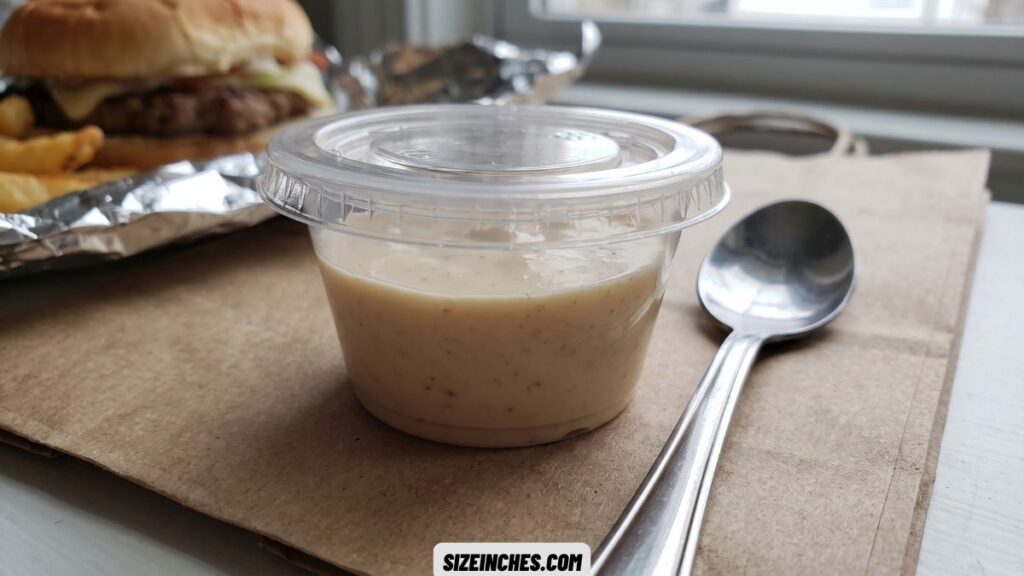
| 2 oz portion cup | 2 fl oz exact | Deli sauce cup | Volume |
| Double espresso | ~2 fl oz | A standard doppio shot | Volume |
| Travel toiletry bottle | ~2 fl oz | Common carry-on size | Volume |
| Standard shot glass | 1.5 fl oz | Two-thirds of 2 oz | Volume |
| Medicine dose cup | 1 fl oz | Two cups equal 2 oz | Volume |
| Tennis ball | ~2 oz (56–59 g) | Near-exact weight match | Weight |
| Large egg | 2 oz exact | USDA standard per egg | Weight |
| 11 US nickels | ~1.94 oz (55 g) | Just under 2 oz | Weight |
| Two slices of bread | ~2 oz | About 25–30 g each | Weight |
15 Everyday Things That Hold or Weigh 2 oz
A Quarter-Cup Measuring Cup
READ ALSO : How Tall Is a 12 oz Can? Height, Width, and Real Comparisons (2026)
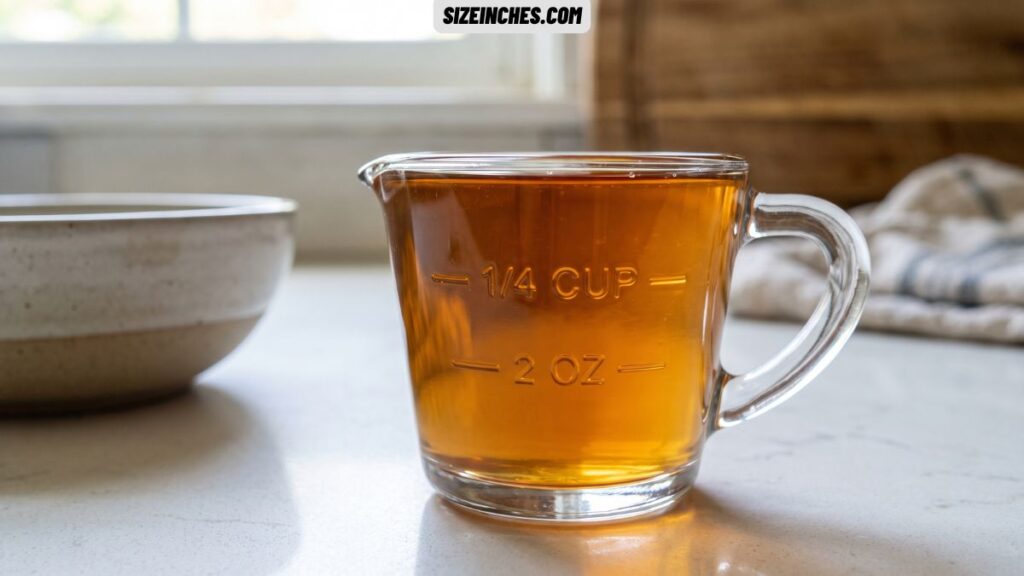
A ¼ cup measure is an exact match for 2 fluid ounces. Since one cup holds 8 fl oz, a quarter of that is exactly 2 fl oz (59 mL). Fill a ¼ cup to the brim and you’re holding exactly 2 oz of liquid. It’s the simplest, most reliable way to picture the volume.
Measuring cups follow the US customary system, where 1 cup equals 8 fluid ounces. Most nesting sets include ¼, ⅓, ½, and 1 cup sizes. Many also stamp the fluid-ounce or milliliter equivalent right on the handle. Since a ¼ cup is in nearly every kitchen drawer, it’s the fastest way to measure 2 oz without doing any math at all.
Four Tablespoons
Four level tablespoons equal exactly 2 fluid ounces. Since one tablespoon holds 0.5 fl oz, four of them add up to 2 fl oz (59 mL). Measure out four spoonfuls and you’ve hit the mark exactly. It’s handy when you have measuring spoons but no cup.
The US tablespoon is a fixed measure at 14.8 mL, not the same as a random spoon from a drawer. That’s why recipes call for a proper measuring spoon. Twelve teaspoons also equal 2 fl oz, since three teaspoons make one tablespoon. For thick things like peanut butter or sour cream, level the spoon with a knife so you don’t overshoot the volume.
A 2-Ounce Portion Cup
READ ALSO : 2 mm Visual: How Big Is 2 mm, Really?
A small deli sauce cup is often exactly 2 fluid ounces. These plastic portion cups come in set sizes, and the 2 oz version is one of the most common in restaurants. Grab one from a takeout bag and you’re holding an exact 2 oz measure. It’s a spot-on everyday reference.
Portion cups, sometimes called soufflé cups, are made in sizes from 0.5 oz up to 4 oz. The 2 oz size is standard for dipping sauces, dressings, and condiments. They’re made from clear plastic or paper, often with a snap-on lid. Since the size is printed on the base of most cups, you can check it yourself in seconds.
A Double Espresso
A double shot of espresso is close to 2 fluid ounces. A single shot pulls about 1 fl oz (30 mL), so a double, called a doppio, comes to roughly 2 fl oz (59 mL). Look at a double espresso in its cup and you’re seeing about 2 oz of liquid.
Shot volume varies by café and machine, so treat this as approximate. Some baristas pull shorter or longer shots depending on the beans. Espresso is made by forcing hot water through finely ground coffee under high pressure, which is why it comes out thick with a layer of crema on top. A double espresso gives you a familiar, everyday picture of 2 fluid ounces.
A Travel-Size Toiletry Bottle
A travel toiletry bottle is often about 2 fluid ounces. Many refillable bottles hold 2 oz (59 mL), which sits comfortably under the carry-on liquid limit. Pick one up from a travel kit and you’re holding roughly 2 oz. Since so many people travel, it’s an easy reference to find.
Bottle sizes vary by brand, so treat this as approximate. In the US, the TSA limit for carry-on liquids is 3.4 oz (100 mL) per container, which is why travel bottles cluster at 2 and 3 oz. The bottles are usually squeezable plastic with a flip or screw cap. A 2 oz travel bottle gives you a real, hold-in-your-hand feel for the volume.
A Tennis Ball
A tennis ball is a near-exact match for 2 ounces by weight. Regulation balls weigh between 56 and 59.4 grams, and 2 oz equals 56.7 grams. So a tennis ball lands right in that window. Hold one in your palm and you’re feeling almost exactly 2 oz of weight.
Tennis balls follow strict rules set by the International Tennis Federation, which fix both the size and the weight. The felt cover is wool and nylon over a hollow rubber core filled with pressurized air. That pressure is why a fresh can hisses when opened. Because the weight range is so tight, a tennis ball is one of the best 2 oz weight references you can find.
A Large Egg
A large egg weighs exactly 2 ounces by the USDA standard. Egg sizes are set by weight per dozen, and large is defined as 24 oz per dozen. Divide that by 12 and you get exactly 2 oz per egg, shell included. Hold one large egg and you’re holding a 2 oz weight by definition.
The USDA system runs from peewee up to jumbo, each a set weight per dozen. Medium eggs come in at 21 oz per dozen, and extra large at 27 oz. Individual eggs vary a little, since the standard applies to the dozen as a whole. Still, a single large egg is one of the most precise 2 oz weight references in any kitchen.
About 11 US Nickels
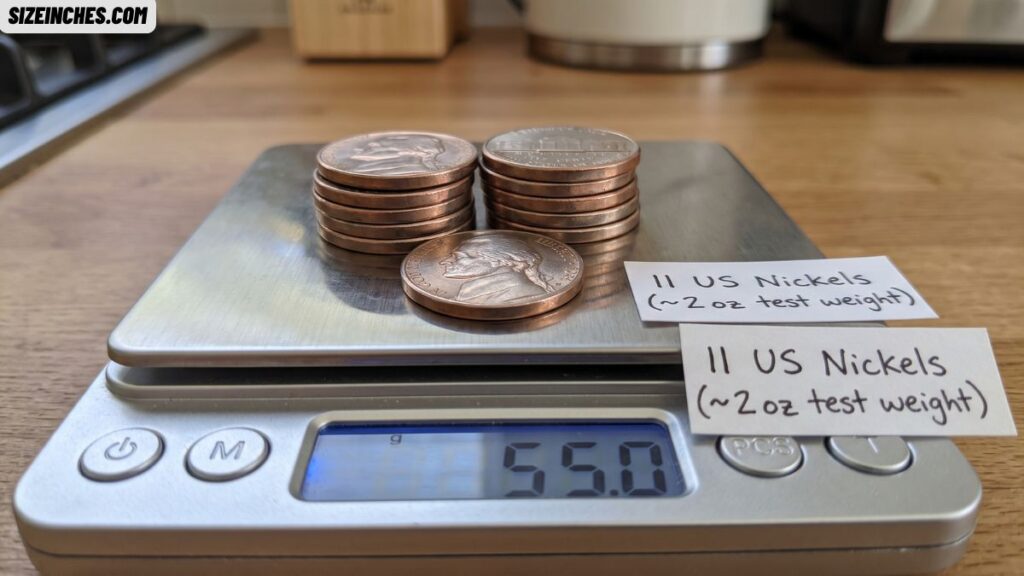
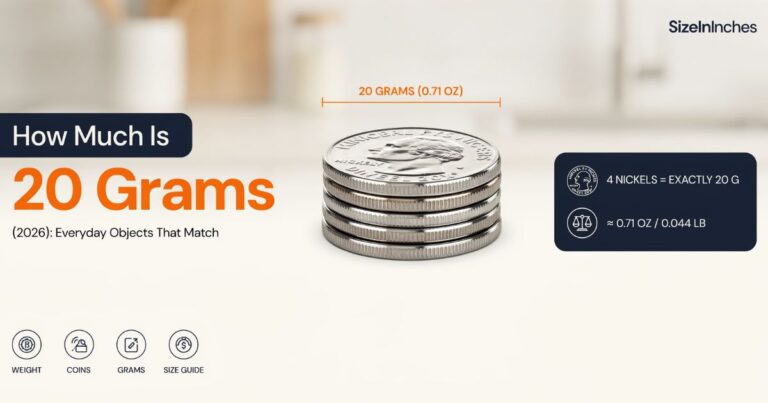
Eleven US nickels weigh close to 2 ounces. Each nickel weighs exactly 5.00 grams, so eleven come to 55 grams, just under the 56.7 grams in 2 oz. Count out eleven coins and you’re within about 3% of the mark. It’s a precise, repeatable way to build the weight.
The US Mint sets the nickel’s weight by law, which is why the number never changes. Every nickel is 75% copper and 25% nickel, giving it a solid feel. To hit 2 oz more exactly you’d need about 11.3 nickels, so eleven runs slightly light. Even so, a stack of nickels makes a free, reliable way to test a small kitchen scale.
Half a Stick of Butter
Half a stick of butter is an exact match for 2 oz, and it works for both measures. A full US stick weighs 4 oz (113 g) and holds 8 tablespoons. So half a stick weighs exactly 2 oz (57 g) and equals 4 tablespoons, which is 2 fluid ounces. It’s the rare object that nails the volume and the weight at once.
The wrapper makes this easy. Every US butter stick is printed with tablespoon lines, so you can cut straight to the 4-tablespoon mark with no measuring at all. Butter is made by churning cream until the fat separates and thickens. Most of the world sells butter in solid blocks instead of sticks, so this trick works best in the US. Half a stick gives you a perfect 2 oz reference.
A 2-Ounce Baby Bottle
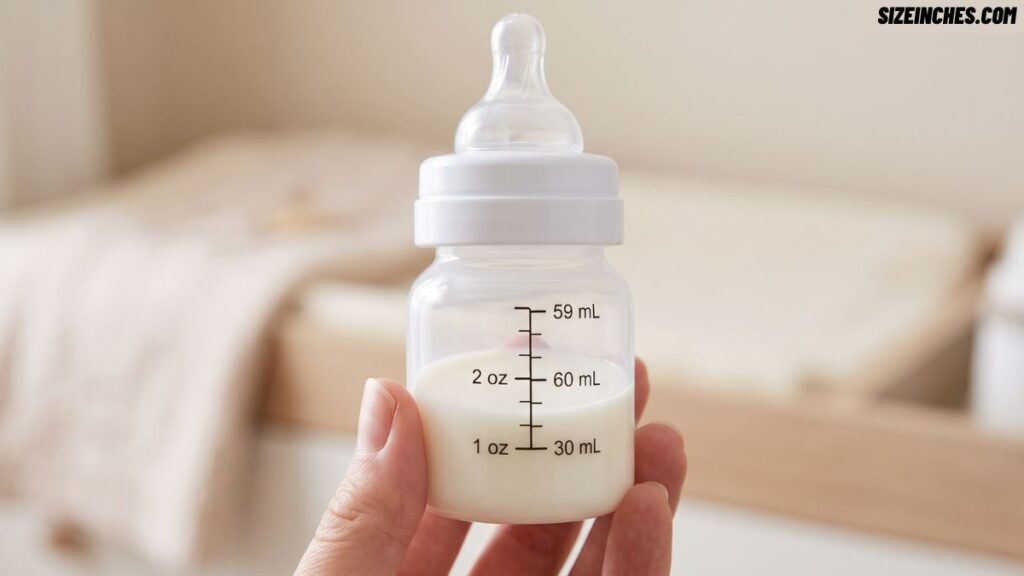
A newborn baby bottle is often exactly 2 fluid ounces. Hospitals and formula makers use the 2 oz (59 mL) size for the first days of feeding, since newborns take only small amounts. Pick one up and you’re holding an exact 2 oz measure with markings printed on the side.
Baby bottles come in a set range of sizes, usually 2, 4, 5, 8, and 9 ounces. The small 2 oz bottle suits a newborn’s tiny stomach, which holds very little at first. Most are made from BPA-free plastic or glass, with ounce and milliliter lines molded into the side. Since the volume markings are right there, a 2 oz baby bottle is one of the clearest volume references around.
A 2-Ounce Perfume Bottle
A standard perfume or cologne bottle is often close to 2 fluid ounces. Many are sold at 60 mL, just a hair over the 59 mL in 2 fl oz. Hold one and you’re within about 2% of the mark. Since the size is printed on the box, it’s easy to check.
Fragrance bottles come in set sizes, usually 1 oz (30 mL), 1.7 oz (50 mL), 2 oz (60 mL), and 3.4 oz (100 mL). The 3.4 oz size exists because it matches the TSA carry-on liquid limit exactly. Bottles are made from thick glass with a spray pump inside. A 2 oz perfume bottle gives you a real, hold-in-your-hand feel for the volume.
Five AAA Batteries
Five AAA batteries weigh close to 2 ounces. A standard alkaline AAA cell weighs about 11.5 grams, so five come to roughly 57.5 grams, right at the 56.7 grams in 2 oz. Pull five from a remote drawer and you’re within a gram of the mark.
Battery weight depends on the type, so treat this as approximate. Lithium AAA cells are much lighter at about 7.6 grams, while rechargeable NiMH ones run heavier near 14 grams. The alkaline version sits in the middle. Inside each cell is a mix of zinc and manganese dioxide that makes the power. Since AAA batteries are in so many devices, five of them give you a quick, close 2 oz weight.
Two Slices of Bread
Two slices of sandwich bread weigh close to 2 ounces. A standard slice weighs about 25 to 30 grams, so a pair comes to roughly 50 to 60 grams, right around the 56.7 grams in 2 oz. Pick up two slices and you’re holding about 2 oz. It’s one of the easiest kitchen references to grab.
Bread weight shifts with the type and thickness, which is why this one is a range. A thin white slice weighs less, while a thick whole-grain slice weighs more. Bread is made from flour, water, yeast, and salt, then baked until it rises and sets. A standard loaf holds about 20 slices. Two slices give you a close, everyday feel for 2 ounces.
A Standard Chocolate Bar
A full-size chocolate bar is close to 2 ounces. Most single bars weigh between 1.5 and 2 oz (43 to 57 grams), so a larger one lands right at the mark. Pick up a standard bar from a checkout rack and you’re holding close to 2 oz. It’s a tasty, everyday reference.
Bar weight varies by brand, so treat this as approximate. Some classic bars weigh about 1.55 oz, while others reach 1.86 oz or more. King-size bars run well past 2 oz. Chocolate is sold by weight, so the ounces and grams are printed right on the wrapper. Next time you shop, glance at that number and you’ll build a quick sense of 2 ounces.
About a Dozen Sheets of Paper
About twelve sheets of printer paper weigh close to 2 ounces. A single sheet of letter or A4 paper weighs roughly 4.5 to 5 grams, so twelve come to about 54 to 60 grams, right around the 56.7 grams in 2 oz. Grab a small stack and you’re near the mark.
Paper weight depends on thickness and type, which is why this is approximate. Standard office paper is often 20-pound bond in the US or 80 gsm elsewhere, both close in weight. Thicker cardstock weighs more per sheet. This one is handy for mailing, since postal rates step up at each ounce. A dozen sheets give you a simple, everyday 2 oz weight.
How to Measure 2 oz Without a Measuring Cup
No measuring cup or scale on hand? These tricks cover both liquid and weight.
Count Four Tablespoons for Liquid
This is the most exact liquid method. Since one tablespoon holds 0.5 fl oz, just measure four level tablespoons to reach 2 fl oz. If you only have a teaspoon, count 12 teaspoons instead, since three teaspoons make a tablespoon. Level each spoonful with a knife for thick ingredients so you don’t go over.
Use a Shot Glass
A standard US shot glass holds 1.5 fl oz, so 2 fl oz is about one and a third shots. Fill the glass once, then add another third to reach the mark. Some jiggers have a 2 oz side, which gives you an exact measure in one pour. It’s a quick trick when you’re mixing drinks or measuring a small amount of liquid.
Count Nickels or Use an Egg for Weight
For weight, coins work well. Eleven US nickels weigh 55 grams, just under the 56.7 grams in 2 oz. A single large egg weighs exactly 2 oz by USDA standard, so one egg is your fastest kitchen check. A tennis ball also lands right in the 2 oz range if you need something to balance against.
2 oz vs. Other Common Amounts
Seeing 2 oz next to other amounts helps it click. Here’s how it compares, in both liquid and weight.
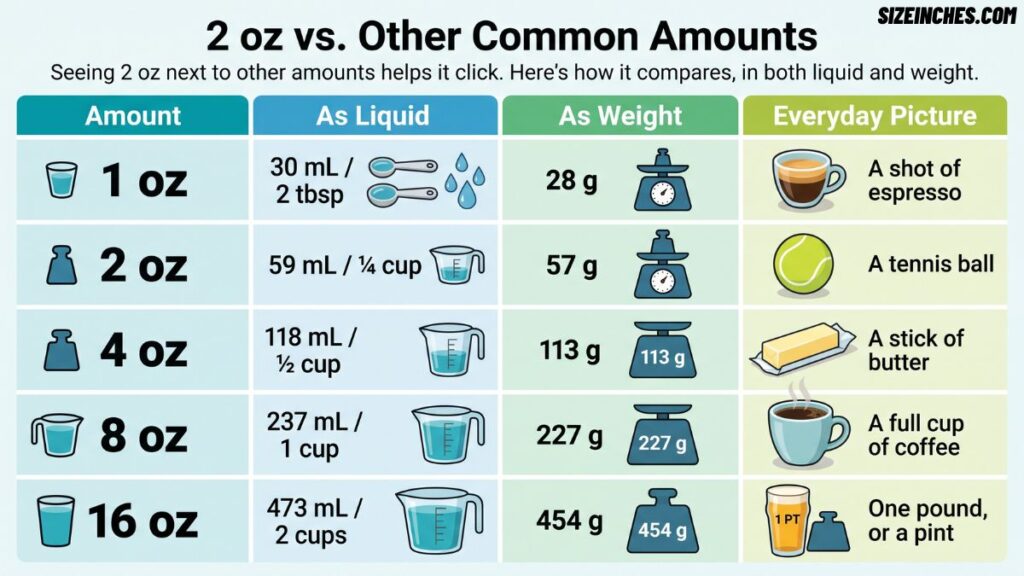
| Amount | As Liquid | As Weight | Everyday Picture |
| 1 oz | 30 mL / 2 tbsp | 28 g | A shot of espresso |
| 2 oz | 59 mL / ¼ cup | 57 g | A tennis ball |
| 4 oz | 118 mL / ½ cup | 113 g | A stick of butter |
| 8 oz | 237 mL / 1 cup | 227 g | A full cup of coffee |
| 16 oz | 473 mL / 2 cups | 454 g | One pound, or a pint |
Two ounces is double 1 oz, which is a single espresso shot. It’s half of 4 oz, and just a quarter of a full 8 oz cup. As a weight, 2 oz is one-eighth of a pound. Keep those anchors in mind, and any small amount from a shot to a full pint becomes easy to judge.
Frequently Asked Questions
What Does 2 oz Look Like in Cups?
Two fluid ounces equals exactly ¼ cup. That is the smallest cup in most measuring sets, and it also equals 4 tablespoons.
What Does a 2 oz Look Like?
As a liquid, 2 oz fills a ¼ cup or a deli sauce cup. As a weight, it looks like a large egg or a tennis ball.
How Large Is a 2 oz Bottle?
A 2 oz bottle holds 59 mL and stands about 3 to 4 inches tall. It is a common travel size, under the 3.4 oz carry-on limit.
What Is an Example of 2 oz?
A large egg weighs exactly 2 oz. Half a stick of butter matches 2 oz in both weight and volume, at 4 tablespoons.
What Does an Ounce Look Like?
One fluid ounce fills 2 tablespoons, about a single espresso shot. One ounce by weight equals 28 grams, close to a slice of bread.
How much is 2 oz of pasta?
Two ounces of dry pasta is one standard single serving by weight. For long noodles like spaghetti, a bundle about the diameter of a US quarter comes to roughly 2 oz. For short shapes like penne, it’s about half a cup dry. Cooked, it roughly doubles in volume.
Conclusion
Now you know the answer to how big is 2 oz. The answer depends on liquid or weight. As a liquid, 2 fluid ounces equals 59 mL, or exactly ¼ cup. That is also 4 tablespoons. As a weight, 2 ounces equals about 57 grams. That is one-eighth of a pound. These simple numbers help you measure with ease.
You can also use everyday things to picture the amount. A ¼ cup measure holds exactly 2 fluid ounces. A large egg weighs exactly 2 ounces. Half a stick of butter matches both measures at once. Keep these easy anchors in mind, and you will always know how big is 2 oz.